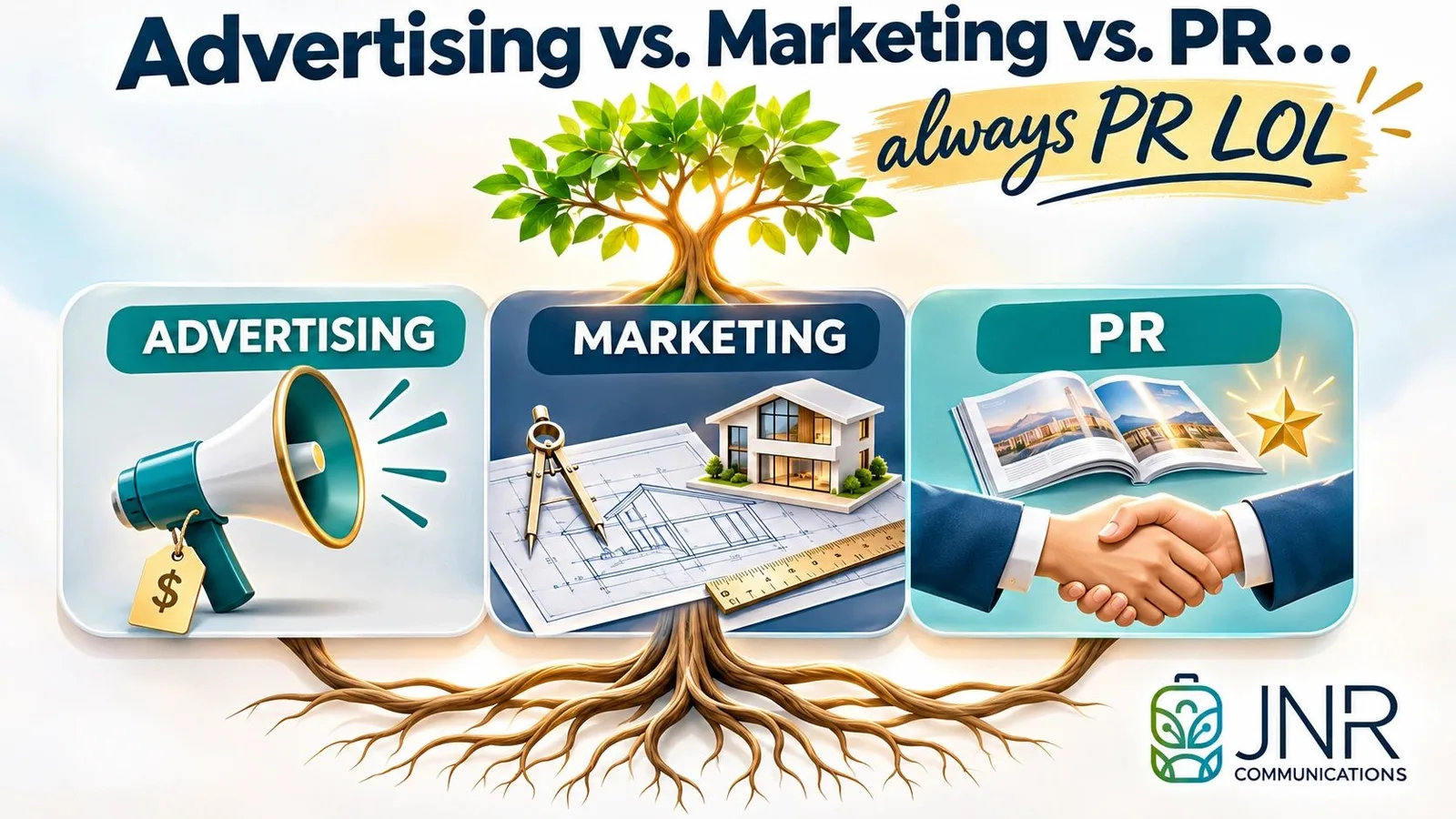

Get senior marketing, PR, and training leadership without a full-time executive salary. See how JNR's fractional leaders help growing brands win and keep trust.
Here is a question I hear from business owners almost every week: "I know we need senior marketing leadership, but how do I justify a six-figure executive salary right now?"
It is a fair question. And for a growing medical aesthetics practice, a beauty brand preparing for launch, or a wellness company expanding into new markets, the honest answer is often that you shouldn't have to.
You need the expertise. You may not need it forty hours a week, and you almost certainly don't need the overhead of an executive search, a full benefits package, and the months it takes a new hire to get up to speed.
That is why fractional leadership has moved from a niche idea to a mainstream growth strategy. And it is why we built two fractional roles at JNR Communications: the Fractional Chief Marketing and PR Officer, and the Fractional Education and Training Director.
What a Fractional Executive Actually Is
A fractional executive is a seasoned leader who works with your business on a part-time or retainer basis, owning a function at a senior level without being a full-time employee. Think of it as borrowing experience rather than building it from scratch.
It is not the same as hiring a freelancer to execute tasks. A freelancer writes the post. A fractional leader decides which posts matter, who they are for, and how they connect to your business goals. They bring strategy, judgment, and, just as important, relationships.
In my experience, that last piece is what most companies underestimate. When you bring in a senior leader, you are not just buying their time. You are gaining access to their network: the editors they know, the referral partners they have cultivated over decades, the industry contacts they trust. That relationship infrastructure shows up on day one.
The Fractional Chief Marketing and PR Officer
Most growing businesses I meet have plenty of marketing activity. Someone posts on Instagram. Someone sends the newsletter. Someone occasionally pitches a local reporter. What they lack is a leader who connects all of it into one strategy that builds trust and drives revenue.
That is the role of a Fractional Chief Marketing and PR Officer. At JNR, it means senior leadership across:
- Brand and messaging strategy: a story that is clear, consistent, and compelling on every channel.
- Media relations and earned media: activating relationships with the journalists, editors, and producers who shape your industry's conversation.
- Social media and community strategy: turning your channels into relationship-building tools instead of broadcast megaphones.
- Marketing planning and budgeting: tying every dollar to a measurable business objective.
- Team and vendor direction: guiding your staff, agencies, and freelancers so everyone pulls in the same direction.
Here is where JNR's approach is different. My partner, Jennifer Rice, brings nearly 30 years of PR and journalism experience, with earned coverage for clients in outlets like Good Housekeeping, New Beauty Magazine, The Today Show, Good Morning America, and many others. When she leads a fractional marketing and PR engagement, those media relationships come with her. You are not hiring someone to start building a network. You are plugging into one that already exists.
That matters more than most people realize. Journalists are flooded with pitches, and they gravitate toward people they already know and trust. A relationship built over years cannot be rushed by a new hire with a great resume.
A full-time hire brings their skills. A fractional leader from a relationship-first agency brings their skills and their network.
The Fractional Education and Training Director
This is the role I am personally very passionate about, because it sits at the intersection of everything I have done in my career.
Before JNR, I spent years designing and managing enterprise learning programs in healthcare technology at Altera Digital Health, including rebuilding a training operation that grew to serve about 1,000 clinicians and 9,000 staff across 74 locations. Earlier, I was a Ministry of Education scholar and lecturer at Nagoya University in Japan. Building programs that genuinely help people learn has been the throughline of my professional life.
Here is what I have learned: in medical aesthetics, medical devices, and wellness, education is not a side project. It is the product experience. A device is only as good as the provider using it. A treatment is only as safe as the team delivering it. A brand is only as trusted as the knowledge it shares.
A Fractional Education and Training Director gives you senior leadership over:
- Staff onboarding and training that gets new team members confident and productive faster.
- Clinical and product education for providers, distributors, and sales teams, which is critical for aesthetic device companies.
- Customer and patient education content that answers questions before they become objections.
- Train-the-trainer programs so your expertise scales without depending on one person.
- Learning measurement that tracks whether training changes behavior, not just whether people clicked "complete."
I have seen companies pour money into marketing while training stayed an afterthought. The result is predictable. Marketing creates interest, and then an underprepared team loses the patient, the client, or the sale at the moment of truth.
Marketing gets attention. Education earns trust.
Why These Two Roles Work Better Together
Marketing and education are usually treated as separate departments. In my view, they are two halves of the same trust-building engine.
Marketing and PR create awareness and credibility. Education turns that awareness into confidence, for your customers and your own team. When one partner leads both, your message stays consistent from the magazine article to the consultation room to the onboarding binder.
Picture a medical aesthetics device company launching a new treatment. The fractional marketing and PR officer secures coverage and builds momentum. The fractional training director makes sure every provider who buys the device can explain it clearly, perform it confidently, and educate patients honestly. The story the media tells and the experience the patient has finally match.
I learned this lesson in healthcare technology long before I applied it to PR. The rollouts that succeeded were never the ones with the flashiest announcement. They were the ones where the people on the front lines understood the tool, believed in it, and could explain it to someone else. Adoption followed understanding every single time. The same is true for a new treatment, a new product line, or a new location. Visibility gets people in the door. Education is what makes them stay, refer a friend, and come back.
The Real Benefits of a Fractional Resource Through JNR
Let's get practical. Here is what fractional leadership delivers for the businesses we work with.
1. Senior expertise at a fraction of the cost. You get executive-level strategy without the full salary, benefits, and recruiting fees of a full-time hire.
2. Speed. Executive searches can take months. A fractional leader can be contributing within weeks.
3. Built-in relationships. This is the JNR difference. Our fractional leaders bring media, industry, and referral relationships that would take a new hire years to build.
4. Flexibility that matches your growth. Scale up for a product launch or trade show season, then scale back when things are steady.
5. An outside perspective. We have seen what works across many businesses and industries, and we bring that pattern recognition to yours.
6. Lower risk. If your needs change, a fractional arrangement adjusts far more easily than a full-time executive role.
7. Capability that stays. A good fractional leader builds systems, trains your people, and documents processes, so the value remains long after the engagement evolves.
Are You Ready for Fractional Leadership?
Ask yourself these questions honestly:
- Are you spending on marketing but unsure what it is producing?
- Is your founder or practice owner still the de facto head of marketing, PR, or training?
- Do new hires take too long to become confident and productive?
- Are you launching a product, entering a new market, or preparing for a major event?
- Do you need senior strategy but can't yet justify a full-time executive salary?
If you answered yes to two or more, a fractional leader may be the most strategic investment you make this year.
Here is something you can do today. Write down the three business outcomes you most need in the next twelve months. Next to each one, write the name of the senior person who owns it. Wherever the answer is blank or "sort of," you have found your fractional opportunity.
The Bottom Line
When I lived and worked in Japan, I learned the value of nemawashi, the careful work of preparing a tree's roots before you move it. Growing companies need the same preparation: the right strategy, the right relationships, and the right people in place before the big moment arrives.
Fractional leadership gives you that foundation without overextending your budget. And at JNR, it comes with something you cannot find on a job board: decades of relationships, shared generously in the spirit of Givers Gain.