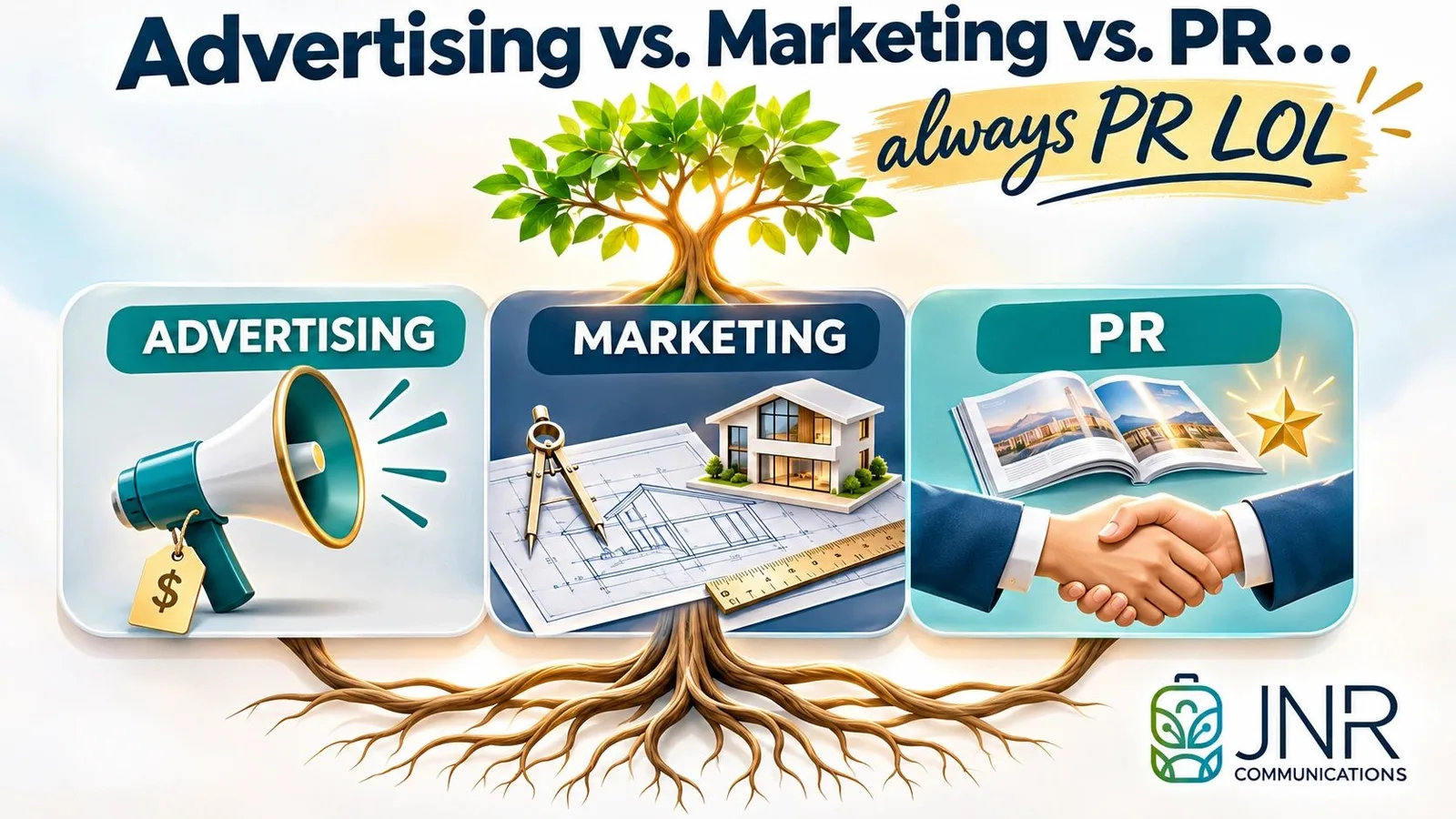
Here is a conversation I have had dozens of times.
Someone asks what I do. I say I work in PR. They nod politely, say "oh, interesting," and then immediately change the subject. Or they say something like "so you spin stories for companies?" or "is that basically advertising?"
This is a real problem. Not because the work isn't valuable. It absolutely is. But because the phrase this industry has used for over a century has quietly become either misunderstood, undervalued, or just plain confusing to the people we're trying to serve.
So let's try something different today. Let me describe what this work actually is without falling back on those two overused words. Not because I'm embarrassed by them, but because you deserve a clearer picture of what you're actually investing in when you bring a strategic communications partner into your business.
It Starts With Your Story
At its core, what most businesses need isn't a press release or a media pitch. They need someone who can identify the story worth telling about them and then get that story in front of the right people in a credible, authentic way.
Call it narrative strategy. Call it story amplification. Call it earned media positioning. Whatever term you use, the function is the same: figure out what is genuinely newsworthy or compelling about your brand, and build a pathway to get that message validated and amplified by trusted third parties.
In my years working across healthcare technology and business development, I have noticed something consistent: the businesses that struggle most with visibility aren't doing bad work. They're simply not translating that work into a story that resonates outside their own walls. A great story doesn't sell itself. It needs a strategic narrator, and it needs the right relationships to carry it forward.
It Is Trust Architecture
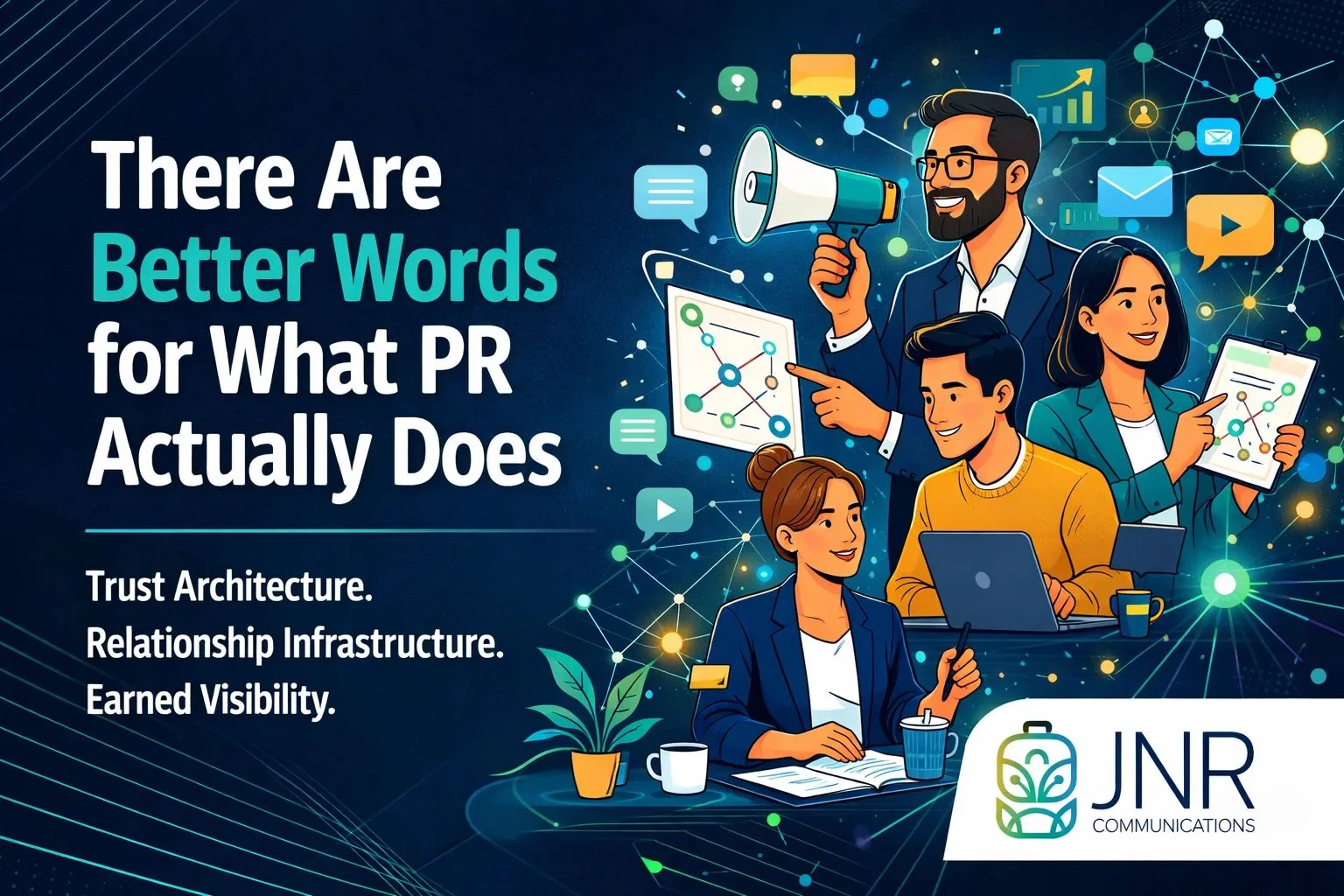
If I had to pick one phrase to replace the two words we're setting aside today, I'd call this work "trust architecture."
Think about how purchasing decisions actually happen in high-stakes industries like medical aesthetics, wellness, or plastic surgery. A potential patient doesn't see a banner ad and immediately book a consultation. They read an article. They see a physician quoted in a magazine. They notice a medspa was named in a "best of" roundup. They hear a brand mentioned on a podcast they trust.
These are trust signals. They are third-party validations telling someone: this brand is credible, this person knows what they're talking about, this practice is worth considering. No amount of paid advertising can manufacture the kind of credibility that comes from a respected journalist choosing to feature your story.
Trust architecture is the infrastructure that makes everything else in your marketing actually work. Your social media posts perform better when people already recognize your name. Your paid ads convert at higher rates when your brand carries credibility. Your referral network deepens when other professionals have seen you featured in the publications your shared audience respects.
The goal isn't just visibility. It's trusted visibility. And building that trust requires patience, consistency, strategy, and genuine relationships with the people who shape how your audience thinks.
You Can Also Call It Relationship Infrastructure
Here's where my own background comes in, because I've spent years thinking about why some businesses effortlessly build momentum while others consistently struggle to get traction.
The difference, more often than not, comes down to relationship infrastructure. In my time working within professional networking organizations, I've seen businesses transform when they stopped thinking about marketing as a broadcast activity and started thinking about it as a relationship activity. The principle I return to again and again is simple: give before you ask. Create value first. Build trust before you need anything in return.
This principle doesn't just apply to networking events. It applies to every touchpoint your brand has with the world. A well-placed editorial feature in a relevant publication creates value for the journalist, value for the reader, and value for your brand. Everyone gains something genuine.
What we do at JNR Communications is build and maintain the relationships that make these exchanges possible at scale. Jennifer Rice has spent nearly 30 years cultivating genuine connections with editors, journalists, and media contacts across beauty, wellness, and medical publications. That is not a contact list. That is an infrastructure. And that infrastructure is what your brand accesses when you invest in this kind of strategic communications work.
Why This Service Is Not Optional
I want to address something I hear fairly often from business owners: "We don't really need this right now. We have a website and social media. We're doing fine."
Here's what I know from experience: the best time to build trust architecture is before you desperately need it.
The brands with the strongest earned media presence didn't build it during a crisis or a slow quarter. They built it consistently over time, and that foundation is what carries them through difficult moments. When a competitor launches a similar product, when a negative review gains traction, when regulatory changes affect your industry, the brands with strong media credibility navigate those challenges far more effectively than brands that are invisible to journalists and unknown to the publications their audiences trust.
Consider the medical aesthetics industry specifically. Patients are sophisticated and have access to more information than ever before. They research providers. They read reviews. They look for expert quotes and editorial endorsements before committing. A practice that has been consistently featured in trade and consumer media has a built-in credibility advantage that simply cannot be replicated by running more ads or posting more often.
Beyond crisis preparedness, there is the growth dimension. Visibility compounds over time. Every feature generates more inquiries. Every award win opens doors to new media opportunities. Every expert quote in a trusted publication gets shared, referenced, and added to the permanent record of your brand's story. This is a compounding asset, and the earlier you start building it, the more powerful it becomes.
What JNR Brings to This Work
I am genuinely proud of what my partner Jennifer Rice has built over the course of her career. Her relationships with publications like Good Housekeeping and New Beauty Magazine weren't built through mass outreach or automated pitching. They were built through years of consistent, genuine engagement. That is what relationship infrastructure looks like from the inside.
When a client works with JNR Communications, they are not paying for someone to blast out press releases and hope something sticks. They are investing in a team that already has trusted relationships with the people who cover their industry. Jennifer understands which editors are working on which stories. She knows what makes a pitch relevant and timely versus what gets ignored. That knowledge comes from decades of genuine relationship building.
My role is to bring that same relationship-first philosophy to social media strategy and business development. Building your story isn't just about getting into magazines. It's about cultivating the web of genuine connections that gives your brand ongoing, compounding momentum. Media placements, networking referrals, and social media community building all reinforce each other when they're aligned around a consistent story and a thoughtful communications strategy.
Because here's the thing: once your audience starts hearing your name in multiple trusted contexts, something shifts. You stop being a brand they've heard of and start becoming a brand they already trust. That transition is what this work is designed to create.
The Words Aren't the Problem. The Understanding Is.
The phrase this industry uses isn't going away anytime soon. But I do think it's worth understanding what actually sits underneath it.
What we do is build trust architecture. We develop relationship infrastructure. We shape the narrative strategy that positions your brand as credible, relevant, and worth paying attention to. We earn visibility rather than buying it, and earned visibility is always more durable than the paid kind.
Whatever you call it, the work matters. And the businesses that invest in it consistently are the ones that show up in the rooms and publications that influence the decisions of their ideal clients.
If you are ready to start building something real, I would love to have a conversation.
Ready to Build Your Trust Architecture?
At JNR Communications, we combine Jennifer Rice's nearly 30 years of media relationships with strategic networking expertise to help businesses in beauty, wellness, and medical aesthetics earn the visibility they deserve.
Let's talk about your goals.
Greg@JNRcommunications.com | JNRcommunications.com
ABOUT THE AUTHOR
Greg Kaufman is a Partner at JNR Communications, a Las Vegas-based PR agency specializing in medical aesthetics, beauty, and wellness industries. With decades of experience in healthcare technology education, international business development, and professional networking, Greg brings a unique relationship-focused perspective to social media strategy and communications. He believes the most effective communications begin with genuine connection, and that relationship infrastructure is the foundation of sustainable business growth. Connect with him on LinkedIn.