An honest look at what PR can and cannot do, and why the wrong timing costs you more than the retainer.
One of the hardest conversations I have in my work isn't with a difficult client. It's with an excited founder on a discovery call, full of momentum and ambition, when I have to say the words that almost no agency wants to say out loud: “I don't think you're ready for PR yet.”
I know how that lands. Someone has gathered the courage to invest in their brand, they've picked up the phone, and here I am slowing them down. But over the years I've learned that the most valuable thing a PR partner can offer isn't always a proposal. Sometimes it's honesty.
At JNR Communications, we'd rather lose a month of billing than take on a client who isn't set up to succeed. Because PR amplifies what already exists. If what exists isn't ready for the spotlight, the spotlight doesn't help. It exposes.
So let's talk about it plainly. Here's how to tell when your business is ready for PR, when it isn't, and how we at JNR navigate that conversation with the businesses who come to us.
What PR Actually Does (And Doesn't Do)
Before we can talk about readiness, we need to align on what PR is actually for. In my experience, most misunderstandings about readiness come from misunderstanding the tool itself.
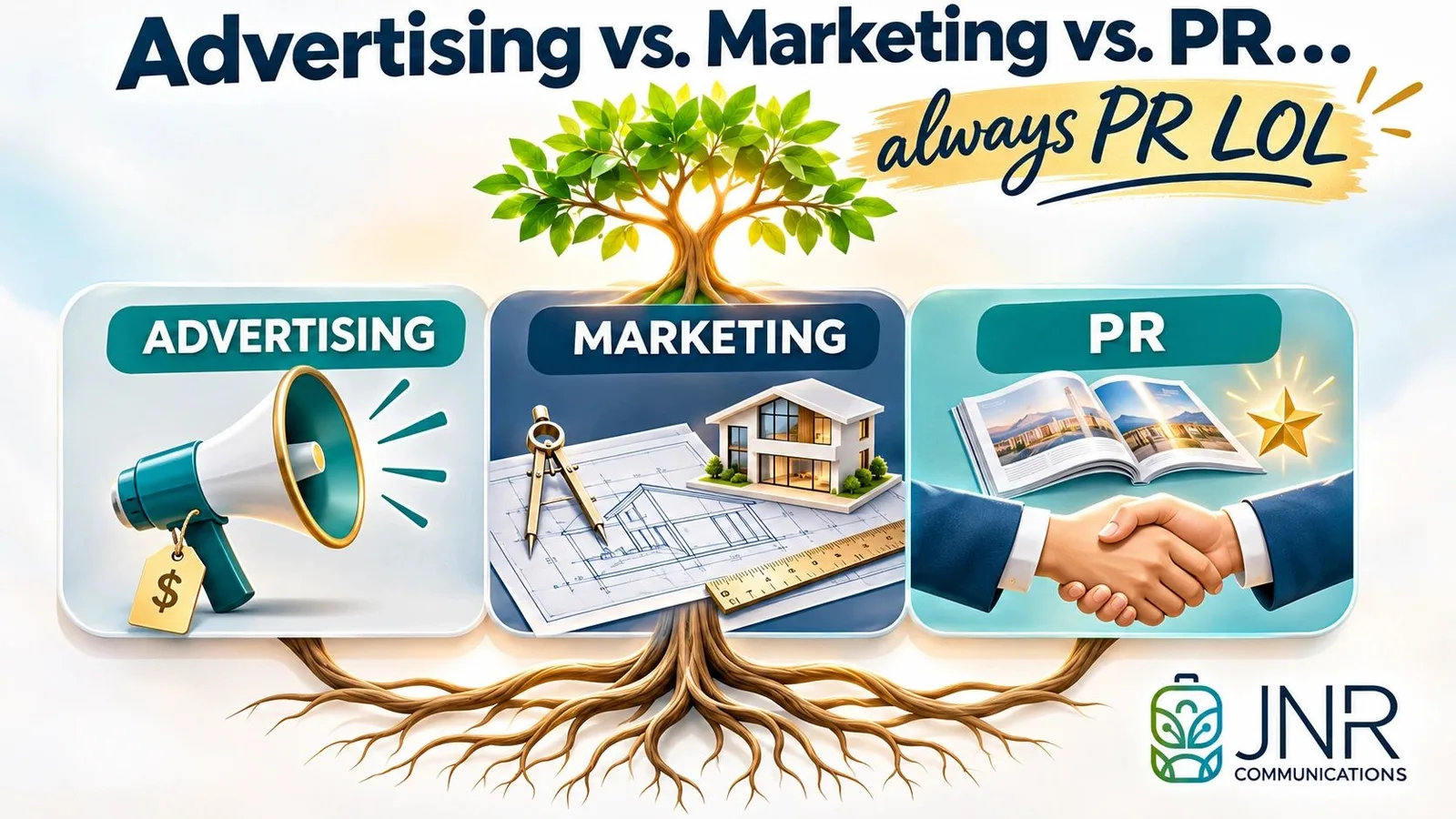
PR builds credibility, reach, and reputation. It puts your story in front of audiences who wouldn't find you on their own. It earns third-party validation that no amount of paid advertising can replicate. A feature in New Beauty Magazine or Good Housekeeping tells the world that an editor, someone with no financial stake in your success, decided you were worth covering.
That's powerful. But notice what PR isn't.
• PR isn't a sales funnel. It creates awareness and trust, not direct transactions.
• PR isn't a fix for a broken product, service, or customer experience.
• PR isn't a substitute for a functioning website, clear messaging, or a team that can handle inbound interest.
• PR isn't instant. Earned media is a compounding investment, not a vending machine.
When a business understands those boundaries, readiness becomes a much clearer conversation.
Signs You Are Ready for PR
✓ You have a clear offer, a dialed-in customer experience, and consistent positive word of mouth.
✓ Your website, social presence, and visual identity reflect the brand you want the media to see.
✓ You have the operational capacity to handle a spike in inquiries, bookings, or sales.
✓ You have a genuine story, differentiator, or point of view that a journalist can build coverage around.
✓ You're thinking in terms of twelve to twenty-four months, not next Tuesday.
The Honest Readiness Questions We Ask at JNR
When a prospective client reaches out, Jennifer and I walk through a short set of questions before we ever discuss scope or pricing. These aren't gotchas. They're the same questions I'd want someone to ask me if I were about to invest serious money in my brand.
The first is simple: If a producer called you tomorrow for a national segment, what would happen? If the answer involves panic, a half-finished website, or an inbox no one monitors, we've already learned something important.
The second: What happens after someone reads about you? Is there a clean path from curiosity to contact to conversion? If a reader lands on your site and can't find your services, your pricing philosophy, or a way to reach you, the coverage will flow right through your funnel like water through a sieve.
The third question is the one that surprises people most. It's about word of mouth. If your existing clients and patients aren't already telling their friends, a press hit won't manufacture enthusiasm that isn't there. Coverage amplifies momentum. It doesn't create it from scratch.
Signs You Aren't Quite Ready Yet
Here are the patterns I see most often when a business isn't in the right position for a PR campaign. None of these are permanent conditions. They're just things to address first.
• Your offer is still shifting. You're testing pricing, services, or target audiences week to week. Media stories need a stable narrative.
• Your website tells a different story than your social media, which tells a different story than your intake experience. Inconsistency erodes the trust PR is designed to build.
• You don't have capacity. If you're already maxed out, new inbound interest will create a worse customer experience, not a better business.
• You're looking for a two-month home run. Relationship-based PR is a long game. The firms promising instant coverage are usually selling something closer to paid placement.
• You haven't decided who you are. If you can't articulate what makes you different in a sentence, a journalist won't be able to either.
When I see any of these, I say so. And then we talk about what to work on before we re-engage. Sometimes that means three months. Sometimes it means a conversation with a branding partner, a web designer, or an operations consultant first. The point is that the right sequence matters.
How We Handle This at JNR
We run a readiness conversation before any proposal. It's free, it's candid, and it saves everyone time.
If a business isn't ready, we say so. We'll often suggest specific things to address and offer to reconnect in a few months.
When a business is almost ready, we sometimes recommend a smaller foundational engagement focused on messaging, positioning, and press materials before launching full media relations.
We'd rather earn trust by turning down a bad fit than collect a retainer we can't deliver real results on.
Why Saying “Not Yet” Is the Most Credible Thing We Do
Early in my career, working in healthcare technology and later in international business development, I learned something that's shaped how I think about client relationships ever since. The Japanese business concept of nemawashi, which I studied while at Nagoya University, is often translated as “preparing the ground.” Before any major initiative moves forward, you quietly do the groundwork to make sure the decision will actually succeed once it's announced.
PR works the same way. The public campaign is the part everyone sees. The groundwork, your offer, your operations, your brand clarity, your team's readiness, is what determines whether that campaign produces results or just activity.
The Givers Gain principle I carry from my networking background applies here too. If I take on a client I don't believe is ready, I'm not giving them value. I'm taking a check. And in a specialized community like medical aesthetics, beauty, and wellness, reputations travel. Our long-term business depends on every client being in a position to win, not just sign.
So when I tell a founder “not yet,” I'm not turning them away. I'm trying to make sure that when we do work together, the work actually lands. Most of the time, those conversations turn into the strongest client relationships we have, because trust was built before any contract was signed.
A Simple Self-Check Before You Hire Any Agency
If you're considering PR, whether with JNR or anyone else, here's a short checklist I encourage every business owner to walk through honestly.
• Can I describe my brand and my differentiator in one clear sentence?
• Would I be proud of what a journalist finds when they Google my business today?
• Do I have the team, systems, and calendar bandwidth to handle a surge of interest?
• Am I prepared to invest in a twelve-month horizon, not a thirty-day campaign?
• Is my current client or patient experience one I'd want thousands of new people to encounter?
If you answered yes across the board, you're likely in a strong position to have a real conversation about PR. If any of those gave you pause, that's not bad news. That's a map.
Let's Have the Honest Conversation First
At JNR Communications, we'll tell you the truth about whether PR is the right move
for your business right now. If it is, we'll build a strategy rooted in relationships
and earned media. If it isn't, we'll tell you why and when to come back.
Greg@JNRcommunications.com | JNRcommunications.com
About the Author
Greg Kaufman is a Partner at JNR Communications, a Las Vegas boutique PR agency specializing in medical aesthetics, beauty, wellness, and medical device industries. His background spans healthcare technology at Altera Digital Health, international business development, and graduate research as a Ministry of Education Scholar at Nagoya University. He focuses on social media strategy, business networking, and building the relationship infrastructure that makes PR actually work.